
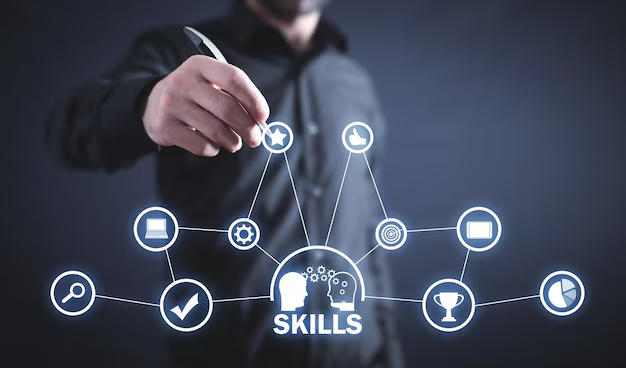
Future Skills Development: The Continuous Learner’s Guide
Future Skills Development: The Continuous Learner’s Guide shows you how to identify, acquire, and enhance the competencies that will be crucial for success in an ever-transforming job market.
Future Skills Development: The Continuous Learner’s Guide helps you navigate the complexity of lifelong learning, prioritize the most relevant skills, and build a personal and professional development plan that ensures your relevance and adaptability. Have you ever wondered how to stay current in a world that changes faster than ever before? In this article, we’ll explore how to become a continuous learner, capable of embracing new technologies, methodologies, and challenges, transforming uncertainty into opportunity.
What Does It Mean to Be a Continuous Learner?
Being a continuous learner means cultivating a growth mindset and a willingness to acquire new skills and knowledge throughout your life, adapting to the demands of a constantly evolving world. It’s not just about formal education, but about curiosity, resilience, and proactivity.
Why Continuous Learning Is More Important Than Old Diplomas:
In the past, a degree guaranteed a lifelong career. Today, skill obsolescence is a reality. What you know now is less important than your ability to learn what’s next. Continuous learning is your insurance policy against irrelevance.
* Dynamic job market: New professions emerge, others disappear.
* Rising technology: Automation and AI demand new competencies.
* Resilience and adaptability: The ability to learn is key to overcoming challenges.
Identifying Future Skills
It’s not about learning everything, but about learning what matters. Knowing which skills to focus on is the first step toward effective development.
1. High-Demand Technical Skills (Hard Skills):
These are the specific, measurable competencies that drive innovation.
* Data Analysis: Ability to interpret and use data to make decisions.
* Artificial Intelligence and Machine Learning: Understanding and applying AI.
* Cybersecurity: Protecting systems and data from digital threats.
* Cloud Computing: Knowledge of cloud platforms (AWS, Azure, Google Cloud).
2. Essential Human Skills (Soft Skills):
These are the interpersonal characteristics that complement technical skills and are difficult to automate.
* Critical thinking and problem-solving: Analyzing complex situations and finding effective solutions.
* Creativity and innovation: Generating new ideas and approaches.
* Collaboration and communication: Working well in a team and conveying ideas clearly.
* Emotional intelligence: Understanding and managing one’s own emotions and those of others.

How to Build Your Continuous Learning Plan
With a clear plan, learning becomes structured and achievable, rather than overwhelming.
1. Define Your Learning Objectives:
Be specific about what you want to learn and why. Connect your learning goals to your career or personal objectives.
* SMART Goals: Your goals should be Specific, Measurable, Achievable, Relevant, and Time-bound.
* Self-assessment: Where are you now? Where do you want to be?
2. Choose Your Learning Resources:
The digital universe offers a multitude of options. Choose those that align with your learning style and budget.
* Online courses: Coursera, Udemy, edX, LinkedIn Learning.
* Bootcamps and workshops: For intensive, practical learning.
* Books, articles, and podcasts: For in-depth study and constant updates.
* Practical projects: Apply what you’ve learned to real-world projects.
3. Create a Learning Routine:
Consistency is more important than intensity. Small blocks of time dedicated to learning are more effective in the long run.
* Time blocking: Schedule a fixed time in your week for learning.
* Microlearning: Take advantage of small intervals to consume educational content.
* Learning communities: Participate in forums, groups, and networks to exchange knowledge.
Common Mistakes on the Continuous Learning Journey
Avoiding these mistakes can accelerate your progress and prevent frustration.
* Analysis paralysis: Spending too much time researching and too little time learning.
* Course fatigue: Enrolling in too many courses without finishing any.
* Not applying knowledge: Learning without practicing leads to rapid forgetting.
* Ignoring feedback: Not seeking or accepting constructive criticism for improvement.
Staying Motivated and Relevant
Continuous learning is a marathon, not a sprint. Staying motivated is essential.
Tips for Sustaining Learning:
* Celebrate small victories: Acknowledge your progress, no matter how small.
* Find a mentor: Someone with more experience can guide and inspire.
* Teach what you’ve learned: Explaining a concept to another person solidifies your own understanding.
In summary, future skills development is not a one-time event, but a continuous and intentional process. By identifying the right skills, creating a structured learning plan, and cultivating a growth mindset, you will not only stay relevant but thrive in any scenario. Embrace curiosity, resilience, and a passion for learning, and the future will be yours.